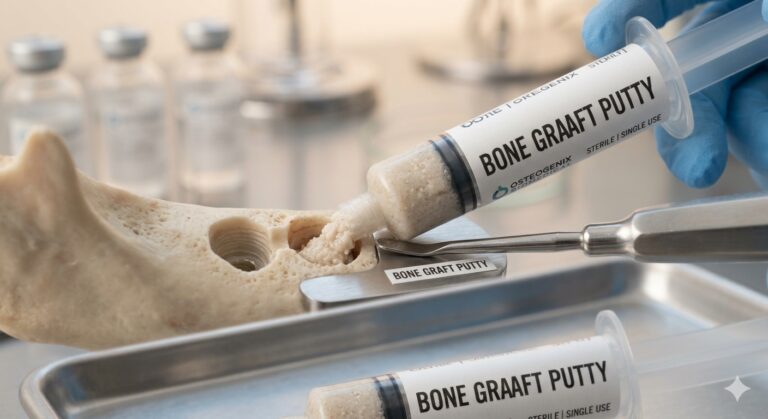
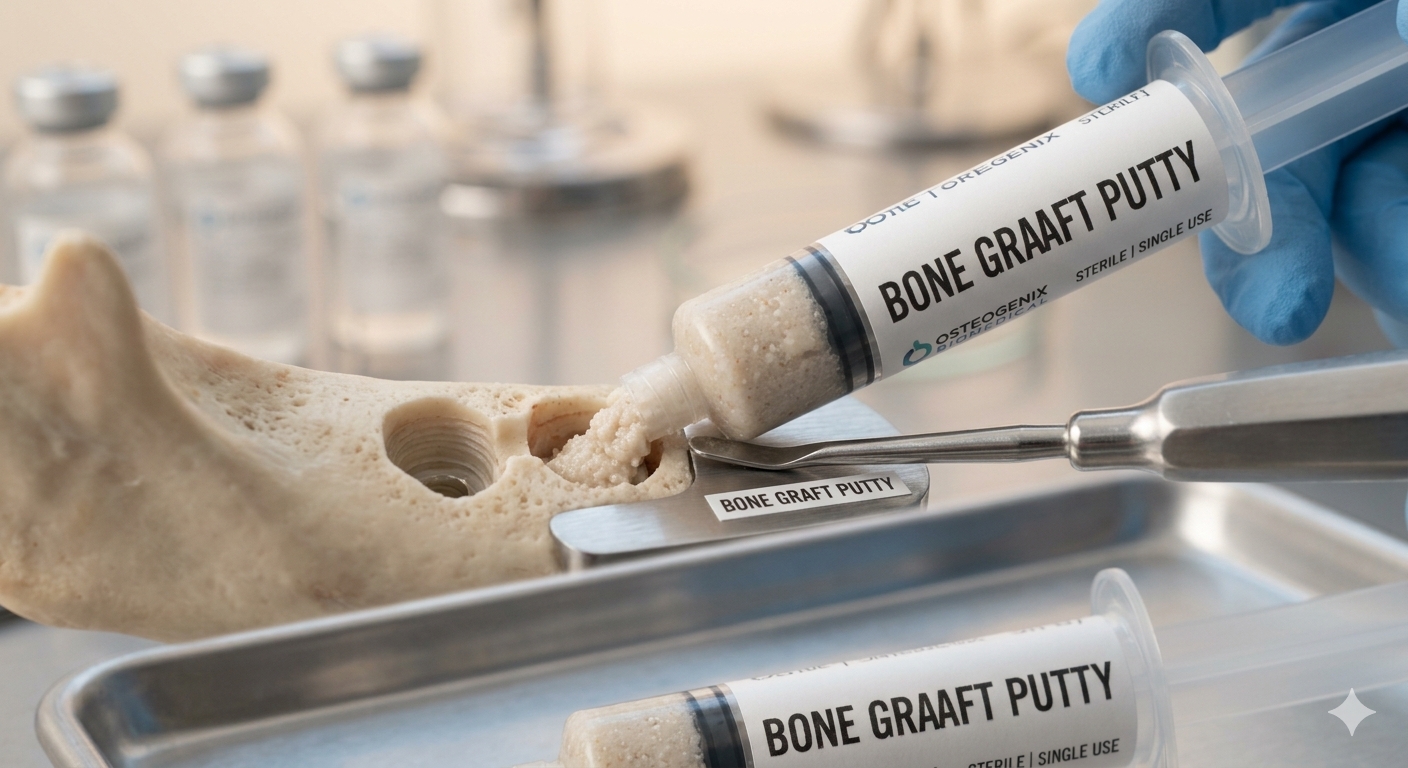
It’s a Tuesday afternoon. Your clinician has just taken out a lower molar and placed a graft in the socket. The patient is booked for an implant consultation in about three months. Then your head nurse mentions the graft box on the shelf is nearly empty, and the replacement order is “waiting on stock”.
If you’ve run a practice for more than a year, you’ve probably had that sinking feeling. Socket preservation looks like a small clinical step, but it sets off a chain of diary slots, stock orders and paperwork. Get one link wrong and a patient’s implant date slips.
This piece is about the practical side, using Powerbone dental putty as the example. It covers what a 11–12-week healing window means for your diary and your stock, and one supplier question that most practices never think to ask.
Why the timeline matters to you, not just the clinician
Your clinician decides when a site is ready. That’s a clinical call, based on the patient, the site and the manufacturer’s instructions for use. The 11–12-week range is a planning guide, not a promise.
But you have to build a diary around it. A range of four weeks is a wide gap when you’re juggling clinician availability, lab slots and patients with holidays booked.
Here’s a simple example. An extraction and graft happen on Tuesday 3 March. Twelve weeks later is 26 May. Sixteen weeks is 23 June. That’s your window.
Pencil in the review appointment at the 12-week mark, then hold a second slot near the 16-week mark. If the clinician is happy at the first review, you release the spare one. If not, you haven’t lost a month.
Plan the diary backwards
Most practices book forwards. They book the extraction, then wait and see. Try working backwards from the implant date you’d like.
Say the patient wants to be sorted before a wedding in September. Count back 16 weeks, add a couple of weeks of breathing room, and you know the extraction needs to happen by early May. That one conversation at the treatment-planning stage saves a lot of awkward phone calls later.
Three things worth doing the same day as the extraction:
- Book the review appointment before the patient leaves the building.
- Put a reminder on your system for the 12-week mark.
- Note the product name, batch number and expiry in the patient record.
That last one matters more than it sounds. We’ll come back to it.
Why a putty format suits a busy surgery
Dental bone regeneration material comes in many forms: granules, blocks, powders, membranes. Bone graft putty is popular in extraction sockets because it’s easy to handle. It packs into the socket without much fuss, and it tends to stay where you put it.
Powerbone is a synthetic putty, which some practices prefer when patients ask about animal or human-derived materials. Check the product’s instructions for use for the full detail on composition, handling and what the manufacturer says about resorption.
Read More: Natural foods that promote gut health.
For you, as the person buying, the practical points are simpler. How is it packed? What’s the shelf life? How many syringes or pots do you actually use in a month? A product that sits in your cupboard for eight months before use is stock you’ve paid for and can’t rely on.
Where Ethoss fits into your stock planning
Ethoss supplies Powerbone, and as with any specialist product, the thing to work out is your own usage pattern rather than the supplier’s.
Here’s a quick way to do it. Look back over the last six months. Count how many socket preservation cases you did. Divide by six. That’s your monthly average.
Now think about your busiest month and your quietest. If you did two cases in January and seven in April, don’t order based on the average alone. Keep enough in hand for a busy month, plus a small cushion for a delayed delivery.
A cushion is more important with a 12–13-week pathway. If a patient has been waiting three months for implant placement and the following step needs a different product that hasn’t arrived, you can’t just shrug and rebook.
The question almost nobody asks: UKCA or CE?
Here’s the point most articles on this topic skip.
Since Brexit, the UK has had its own conformity marking for medical devices, called UKCA. The older CE marking has not vanished overnight, and transitional arrangements have allowed CE-marked devices to continue being placed on the Great Britain market for a period. Those arrangements have been extended and adjusted over time.
What this means in real life is that suppliers’ product pages, brochures and quotes are often vague. You’ll see a CE logo, a UKCA logo, both, or neither. Some say “fully compliant” without saying with what.
Read More: Pupil Evaluation in Critical Care: Why Objective Measurements Matter More Than Visual Assessment
Why should you care? Because compliance isn’t only the supplier’s problem. If you’re using a device in your practice, your own records, audits and inspections can ask what that device is and what marking it carries. “The rep said it was fine” is not a great answer.
So, before you order any surgical product, bone graft putty included, ask the supplier this, in writing:
“Which conformity marking does this product carry: UKCA, CE, or both? Can you send me the declaration of conformity?”
Then file the reply with the product record. It takes five minutes and it’s the kind of paper trail you’ll be glad of later.
Other questions to put to your supplier
While you’re at it, a few more are worth asking:
- Who is the UK-based manufacturer or responsible person for this product?
- What’s the shelf life on delivery, not just on the box?
- Can you provide batch traceability information?
- What’s your usual delivery time, and what happens if it slips?
- Who do I call if something arrives damaged?
Good suppliers answer these without a fuss. If you get a vague reply, that tells you something too.
A word of caution: I’m not a regulator, and the rules on conformity marking have changed more than once. Please confirm what’s currently required with the MHRA directly, rather than relying on this article or on any supplier’s word.
A small habit that saves big headaches
Keep one simple supplier file for each regularly used surgical product. It doesn’t need to be fancy. A folder will do, paper or digital.
Put in it:
- The instructions for use
- The conformity documents you asked for
- The supplier’s contact details
- Your last three order dates
When a clinician asks “what did we use on that patient in March?” or an inspector asks to see your product records, you’ll have it in two minutes rather than two days.
Quick answers to common questions
How long does a socket take to heal after bone graft putty is placed?
Manufacturer guidance for Powerbone points to roughly 12-16 weeks before implant planning, but the exact timing is your clinician’s decision. It depends on the patient, the site and the case.
Is bone graft putty the same as a bone graft?
Bone graft putty is one form of bone graft material. It comes ready to mould, which many clinicians find easier than loose granules. Other forms include powders, blocks and membranes.
Do dental products in the UK need a UKCA mark?
It depends on the product and on current transitional rules, which have changed over time. Ask your supplier which marking their product carries and confirm current requirements with the MHRA.
What should a practice keep on file for a graft material?
Instructions for use, the supplier’s conformity documents, batch numbers and expiry dates for each patient. Your own regulator and indemnity provider can tell you what they expect to see.
If you’d like a second pair of eyes
If you’re reviewing how your practice orders surgical products, or you’d like to talk through stock planning for socket preservation cases, feel free to get in touch. No pressure at all. Sometimes a quick chat over a brew is all it takes to spot the gap before it becomes a problem.
About the Author