
Weight loss used to be a story of calorie charts, willpower, and frustration. However, Mounjaro has changed that conversation. Instead of forcing your body to comply, it works with your biology. That is why so many people are now asking how it really works and whether it lives up to the hype.
In this guide, we break everything down in plain English. You will learn how Mounjaro supports weight loss, what GLP-1 and GIP actually do inside your body, and why this medication feels different from older approaches. More importantly, you will understand the science without feeling like you are reading a medical textbook.
Why Mounjaro Is Changing the Weight Loss Conversation
For years, weight loss treatments focused on one idea: eat less and move more. While that advice is not wrong, it ignores how strongly hormones influence hunger, cravings, and metabolism. Mounjaro entered the picture by targeting those hormones directly, which is why it has gained so much attention.
Unlike traditional weight loss pills, Mounjaro does not stimulate or suppress appetite in an aggressive way. Instead, it helps regulate the signals between your gut and your brain. As a result, many people experience reduced hunger, fewer cravings, and better control over portion sizes. This shift makes weight loss feel more natural and sustainable over time.
Understanding Hormones Before Understanding Mounjaro
Before diving into how Mounjaro works, it helps to understand why hormones matter so much in weight management. Hormones act like messengers. They tell your brain when you are hungry, when you are full, and how your body should use energy.
When these signals are out of balance, weight gain becomes much easier. Stress, lack of sleep, insulin resistance, and modern diets can all interfere with hormonal communication. Therefore, even disciplined eating plans can fail. Mounjaro addresses this problem by restoring clarity to those signals rather than overriding them.
GLP-1 Explained Without the Medical Jargon
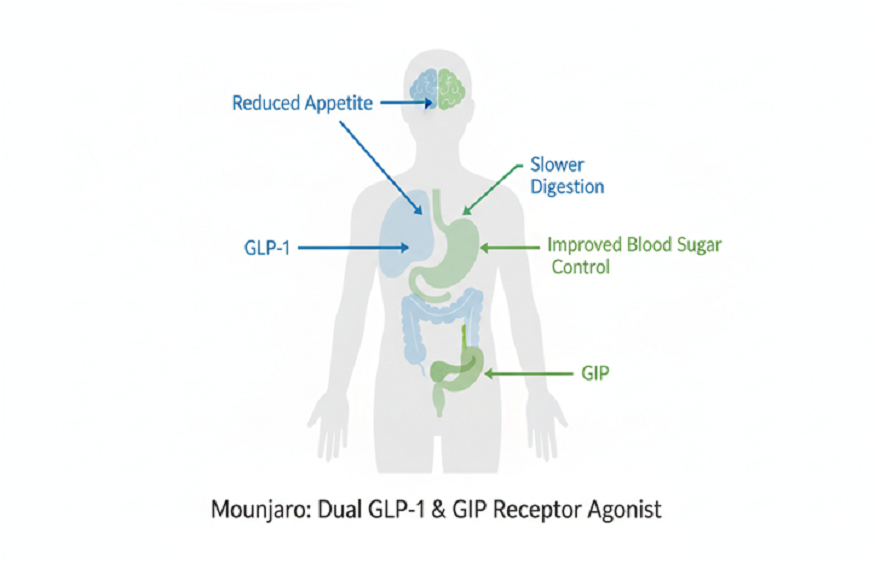
GLP-1, or glucagon-like peptide-1, is a hormone your gut releases after you eat. Its job is to tell your brain that food is on the way and fullness is coming. It also slows digestion, which helps you feel satisfied for longer.
However, in many people struggling with weight, GLP-1 signaling is weaker than it should be. As a result, hunger returns too quickly and portions creep upward. Mounjaro mimics GLP-1, strengthening that fullness signal. Consequently, meals feel more satisfying, and snacking becomes less tempting between meals.
GIP and Why It Matters More Than You Think
GIP, or glucose-dependent insulinotropic polypeptide, does not get as much attention as GLP-1, yet it plays a critical role. This hormone helps your body manage blood sugar and energy storage after meals.
What makes Mounjaro unique is that it targets both GLP-1 and GIP at the same time. While GLP-1 helps reduce appetite, GIP improves how your body uses insulin and handles nutrients. Together, they support better metabolic efficiency. In simple terms, your body becomes better at using what you eat instead of storing it as fat.
How Mounjaro Uses Dual Hormone Action
Most earlier medications focused on GLP-1 alone. Mounjaro goes a step further by activating both GLP-1 and GIP receptors. This dual action is the reason many people see more significant results compared to older treatments.
Because these hormones work together, the effects feel smoother and more balanced. Hunger decreases gradually, energy levels stay steadier, and blood sugar control improves. Over time, this combination helps create the conditions needed for consistent weight loss rather than rapid, short-lived drops.
What Happens in Your Body After You Start Mounjaro
Once you begin Mounjaro, changes do not happen overnight. Instead, your body slowly adapts. Appetite signals calm down first, which often leads to smaller meals without conscious effort.
As weeks pass, digestion slows slightly, blood sugar spikes become less dramatic, and cravings begin to fade. Because these changes happen internally, many people report feeling more in control rather than restricted. This is one of the main reasons adherence tends to be better compared to traditional diets.
Mounjaro and Realistic Weight Loss Expectations
While Mounjaro can support significant weight loss, it is not a magic switch. Results vary depending on dosage, lifestyle, and individual biology. Still, clinical evidence shows that people using Mounjaro often lose a meaningful percentage of their body weight over time.
Importantly, the weight loss tends to be gradual and steady. This pace supports muscle preservation and reduces the risk of rebound weight gain. When combined with balanced eating and light physical activity, the results are often easier to maintain long term.
Side Effects, Safety, and What to Know Upfront
Like any medication, Mounjaro can cause side effects. The most common ones include nausea, mild digestive discomfort, and changes in appetite. Fortunately, these effects often ease as your body adjusts.
Doctors usually start patients on a low dose and increase it slowly. This approach helps minimize discomfort and allows your system to adapt. Before seeking an online mounjaro prescription, it is essential to understand that proper medical screening and follow-up are part of safe use.
How Mounjaro Fits Into a Healthy Lifestyle
Mounjaro works best when it supports, not replaces, healthy habits. It makes it easier to eat mindfully, choose better portions, and avoid emotional eating. However, nutrition still matters.
Balanced meals, adequate protein, hydration, and regular movement all enhance results. Because Mounjaro reduces hunger noise, many people find it easier to build routines they previously struggled to maintain. Over time, these habits reinforce the medication’s benefits.
Who May Benefit Most From Mounjaro
Mounjaro is often prescribed to people with obesity, insulin resistance, or type 2 diabetes. That said, suitability depends on individual health history. A healthcare professional will consider factors like BMI, metabolic health, and existing conditions.
If you are exploring an online mounjaro prescription, make sure the provider includes a full assessment. Responsible prescribing is key to achieving results safely and effectively. When used appropriately, Mounjaro can be a powerful tool rather than a short-term fix.
The Psychological Side of Appetite Control
One underrated benefit of Mounjaro is its impact on food-related thoughts. Many users report fewer obsessive cravings and less constant thinking about meals. This mental shift can feel just as important as physical weight loss.
By calming appetite signals, Mounjaro creates mental space. As a result, people can focus on daily life without feeling controlled by hunger. This change often improves confidence and motivation, which further supports long-term success.
The Future of Weight Loss Medications
Mounjaro represents a broader shift in how medicine approaches weight management. Instead of blaming individuals, science now focuses on biology and hormones. This change reduces stigma and opens the door to more compassionate care.
As research continues, treatments may become even more targeted and effective. For now, Mounjaro stands out because it combines strong clinical evidence with a mechanism that aligns closely with how the body naturally regulates weight.
Final Thoughts
Understanding how Mounjaro works helps set realistic expectations. It does not force weight loss through extreme measures. Instead, it restores balance to systems that may have been working against you for years.
By targeting GLP-1 and GIP together, Mounjaro supports appetite control, metabolic health, and consistency. When paired with informed medical guidance and healthy habits, it offers a promising path toward sustainable weight loss.
About the Author